
Repair 10: How to Redesign Events So Businesses Actually Benefit
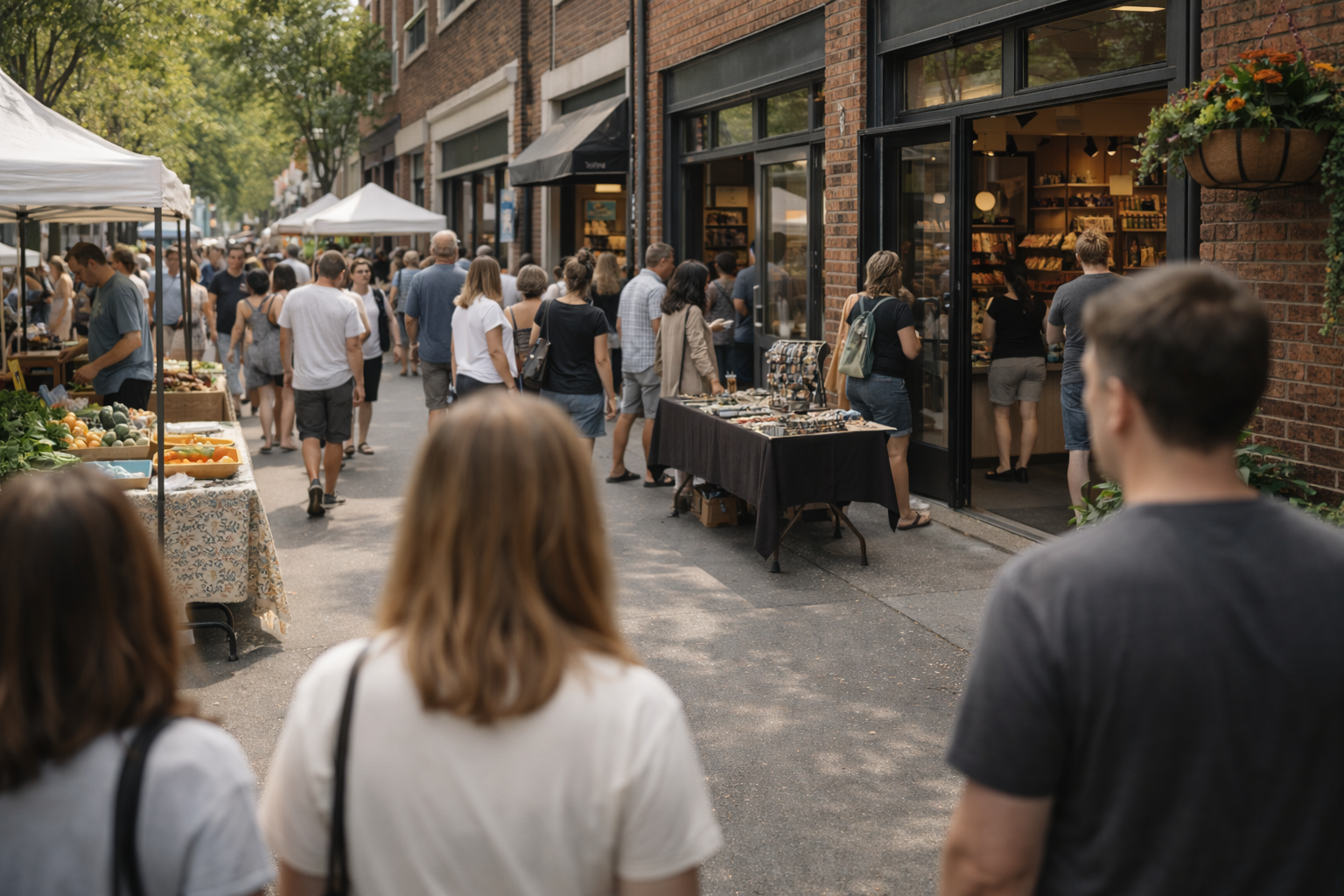
Small changes that increase spending
Here's a conversation that happens in almost every downtown after a big event.
You ask a business owner how it went. They smile, pause, and say something like, "It was a great turnout. Really fun. But we didn't see much of it inside."
That sentence is the problem. And it keeps happening because most downtown events are built to draw a crowd, not to move that crowd into stores.
Good vibes don't pay rent.
Why Events Miss the Mark
Think about the last big event your downtown hosted. Where was the stage? Probably in the middle of the street or a parking lot, pointed away from storefronts. Where were the vendors? Likely lined up along the curb, selling the same things your local shops carry. Where did people spend their time? At the tents, the food trucks, and the entertainment. Not inside businesses.
This isn't anyone's fault. It's just what happens when events get planned for atmosphere instead of economics. Promotion without economic intent is just entertainment. Entertainment alone doesn't build a downtown. Spending does.
The good news is that the layout, timing, and coordination choices that send foot traffic away from stores are exactly the same choices you can reverse.
The Fix
You don't need a new event. You need the event you already have, redesigned to move people into businesses.
That means picking one clear goal before you plan anything, building your layout around storefronts instead of away from them, looping businesses in early, and removing every bit of friction between a visitor and a purchase. None of that requires a bigger budget. It requires a different sequence of decisions.
The steps below walk through each one.
Step 1. Pick One Goal and Commit to It
Before you book a band or design a layout, answer one question. What do you actually want this event to do?
There are really three options. You want people to show up (foot traffic). You want them to stay longer (dwell time). Or you want them to spend money (sales). These three are related, but they're not the same thing. Chasing all three at once usually means you nail none of them.
Pick one. Build everything around it. If the goal is sales, then every decision about the event, from layout to timing to vendor placement, should serve that goal. If you can't connect a planning decision back to your one goal, question whether you need it at all.
Step 2. Redesign the Layout Around Storefronts
This is the single highest-leverage change you can make. Walk your event footprint before anything is booked and ask one question at every location: does this pull people toward a business or away from one?
A few practical moves that work:
Put the main attraction near storefronts, not in a dead zone. When the stage, the car show, or the beer garden is next to shops, people browse on the way in and out. When it's in a parking lot three blocks from Main Street, they stay in the parking lot.
Keep vendor placement out of doorways. Vendors activate empty gaps and vacant lots well. They kill sales when they block a window display or a shop entrance. The rule is simple: vendors fill dead space, storefronts fill wallets.
Leave clear paths in. People won't push through a crowd to enter a store. If the sidewalk in front of a business is packed with event infrastructure, that business might as well be closed.
Step 3. Loop Businesses In Early
Businesses are almost always treated as an afterthought in event planning. The event gets designed, the layout gets approved, the sponsors get lined up, and then someone sends an email to merchants two weeks out asking them to "stay open late."
That's backwards.
When businesses are part of the planning conversation early, three things happen. They show up more prepared. They run promotions that complement the event. And they feel like the event is working for them instead of around them.
Bring five to seven businesses into a short conversation before decisions get made. Share the layout. Share the goal. Ask what would actually help them. You don't need consensus. You need buy-in.
Step 4. Reduce Every Bit of Friction Between People and a Purchase
People don't avoid spending money at downtown events because they're cheap. They avoid it because it feels hard. The store looks closed even though it's open. There's no sign pointing to it. The hours are different from normal and nobody told them.
Fix the friction. Coordinate hours so businesses are open during peak event times. Put directional signage at the event entry points, not just at the stores. Give businesses a simple promotion they can actually use, like a discount tied to the event, a gift with purchase, or a raffle entry. Make it easy for people to say yes.
What You're Measuring Wrong
Attendance isn't success. Attendance is attendance.
If 3,000 people showed up and retail sales were flat or down compared to a normal Saturday, the event didn't work economically. It might have been fun. It might have built community goodwill. Those things matter. But if businesses are the ones enabling your events through sponsorships, memberships, and hours donated, they deserve to see a return.
Start tracking sales-day comparisons. Ask businesses to compare their event-day revenue to the same Saturday from a month ago. It doesn't have to be scientific. Even rough comparisons tell you whether you're moving in the right direction.
Common Mistakes to Skip
Putting a vendor in front of a storefront that sells the same thing. Announcing the event to businesses two weeks out and calling it collaboration. Measuring success in Instagram posts. Running the same event year after year without asking businesses whether it's helping. Assuming that because people showed up, businesses won.
Your Checklist for This Week
Before the next event on your calendar:
✓ Name the one primary goal (foot traffic, dwell time, or sales)
✓ Walk the proposed layout as a customer and count how many storefronts you naturally pass
✓ Talk with five to seven businesses before the layout is final
✓ Identify one low-friction spending opportunity tied to the event
✓ Set up a simple way to compare business sales on event day to a normal day
One layout change, one early business conversation, or one piece of directional signage can shift the whole equation.
How We Help
Event design is one of the areas covered through Event Strategy Review with Small Business and Entrepreneur Assistance. The work helps downtown organizations make targeted, practical changes so events stop being a cost of doing business and start being a tool for growing it.
This is part of The Downtown Repair Manual, a field guide for fixing common downtown problems one repair at a time.
Events shouldn't just look busy. They should work.