
Repair 11: The One Question Every Downtown Event Should Answer
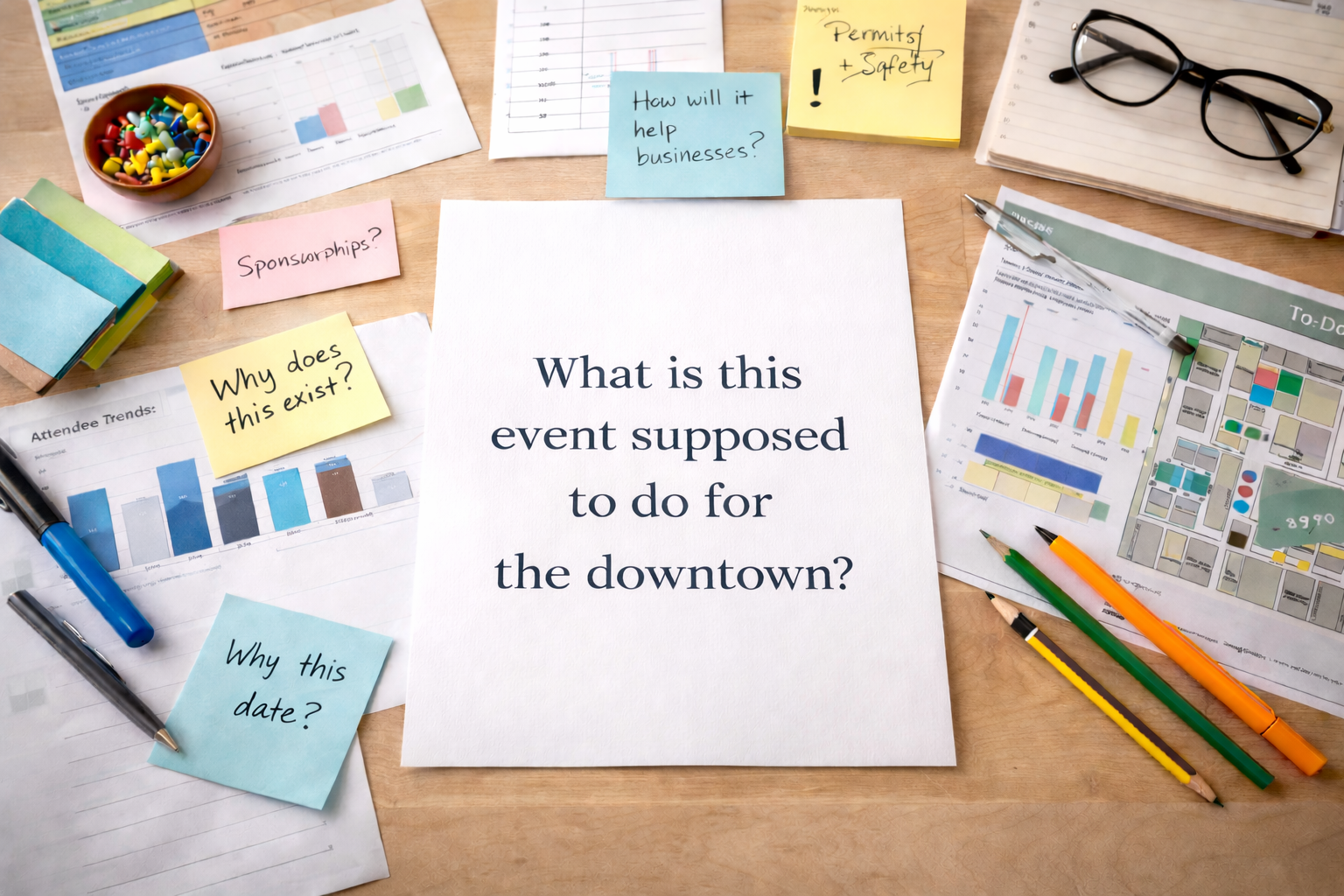
A clarity check before planning begins
The Problem
Your event calendar fills up fast. Someone suggests an idea, a date gets picked, and before long you're deep in logistics. Venue, permits, volunteers, social media posts.
Nobody stopped to ask what the event was actually supposed to do.
That one missing step is why so many downtown events feel successful on the day and disappointing a week later. The crowd showed up. The businesses didn't see it. The board doesn't know if it worked. Everyone has a different story about what happened.
Most event problems don't start on event day. They start in the planning meeting nobody slowed down long enough to run right.
Why This Keeps Happening
Events get repeated because they've always been done. Planning starts with logistics instead of purpose. Success gets assumed instead of defined upfront. And because everyone around the table has a different idea of what "good" looks like, there's no honest way to know if you actually got there.
When the goal isn't clear at the start, everyone's effort goes in a slightly different direction. You end up with a well-run event that doesn't move the needle on anything that matters.
The Fix
Before any planning starts, answer this one question out loud, write it down, and make sure everyone involved can repeat it back to you, "What is this event supposed to do for the downtown?"
Not who it's for. Not how fun it is. Not how many people showed up last year. What is it actually meant to do?
Here's how to work through it:
Step 1. Pick one primary outcome and commit to it.
Every downtown event can realistically do one of three things well: bring more people downtown, get more money into local businesses, or raise awareness of the district as a destination. Those are foot traffic, sales, and positioning. All three matter. But events that try to do all three at once rarely do any of them well.
Pick one. Write it down. Make it the lens everything else gets filtered through.
Step 2. Test every decision against that outcome.
As planning moves forward, keep asking: does this choice help the goal, distract from it, or actively work against it? This applies to everything from stage placement to parking to whether you close the street. If a decision doesn't serve the outcome you chose, it's worth a second look. This one habit alone will save you from a lot of well-intentioned decisions that quietly undermine the event.
Step 3. Tell everyone what the goal is.
Clarity only works if it travels. Share the primary outcome with businesses, vendors, volunteers, and partners before the event, not after. When people know what success looks like, they make better decisions on their own without having to check in at every turn. A business that knows the goal is to drive sales will do something different to prepare than one that thinks it's just a foot traffic day.
Step 4. Evaluate honestly using the same question.
After the event, go back to the original question. Did it do what you said it would do? What helped? What got in the way? This turns the event into a learning tool instead of just another tradition on the calendar. The communities doing downtown events well aren't the ones running the most events. They're the ones getting smarter about each one.
Common Mistakes to Avoid
Planning without naming a purpose first is the obvious one, but it's not the only trap. Changing goals halfway through planning is just as damaging because the whole event ends up built around a moving target. Measuring success by attendance alone is probably the most common mistake in downtown event work. A crowd is not the same thing as an outcome. And skipping honest evaluation because nobody wants to call the event a disappointment is how bad events become annual traditions.
Clear goals make improvement possible. The absence of them makes it almost impossible.
What to Do This Week
Before your next event gets any further into planning:
✓ Write the event's purpose in one sentence
✓ Choose one primary outcome (foot traffic, sales, or positioning)
✓ Review what's already planned through that lens and flag anything that doesn't fit
✓ Share the goal with participating businesses before the event
✓ Decide now how you'll measure success so you're not making it up afterward
How We Help
This kind of clarity check is part of the Event Strategy Review work inside our Organizational Capacity Building services. It helps communities get their event planning aligned with real downtown goals before time and money are committed.