The Most Common Misdiagnosis in Downtown Revitalization
When the Work Is Understood, the Mistakes Become Obvious
Once you understand what downtown revitalization actually is, and once you understand why order matters more than ideas, something else starts to come into focus.
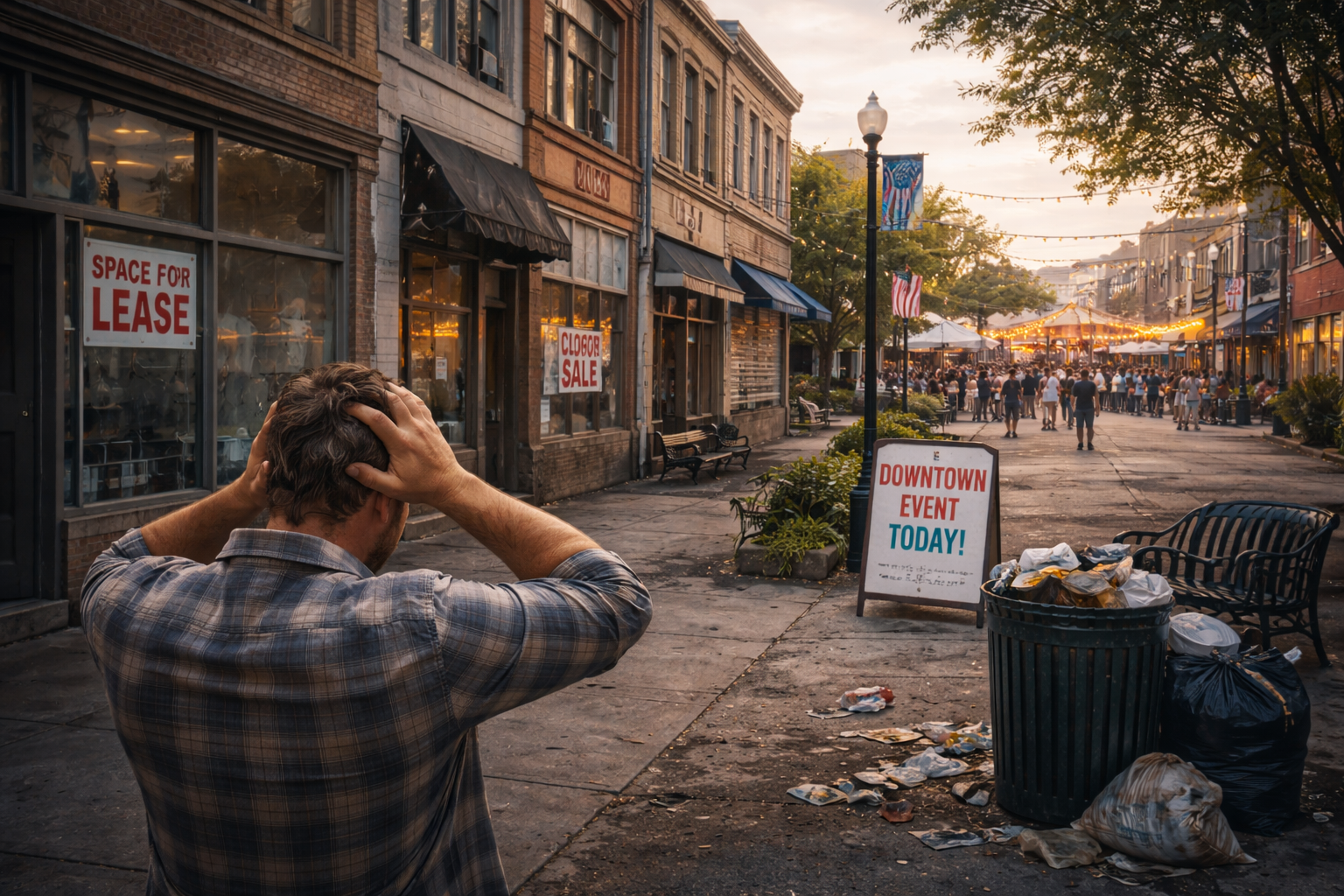
Most downtowns do not struggle because people are not trying hard enough. They struggle because effort is being applied to the wrong problem.
Symptoms are getting treated as causes. Tools are being used as strategies. Activity is being reported as progress.
The diagnosis is off. And when the diagnosis is off, even the right resources produce the wrong results.
This is one of the most important things RAD works to correct with communities. Getting the diagnosis right is not a small thing. It is the thing.
A Quick Reset on What the Work Actually Is
Before getting into the specific misdiagnoses, it helps to restate the foundation.
Downtown revitalization is about strengthening how a downtown functions over time. Not just how it looks. Not just how busy it feels during the holiday shopping season or a summer festival. How it actually functions, day in and day out, in ways that support the businesses, residents, workers, and property owners who depend on it.
That means every decision should be matched to current capacity, sequenced intentionally, and grounded in how the district actually operates right now, not how you hope it will operate in two years.
When those conditions are not in place, the wrong solutions feel right. They feel urgent. They feel visible. They feel like action.
That is the trap.
Misdiagnosis #1: "We Have a Marketing Problem"
This is usually the first conclusion reached when downtown feels slow or underperforming.
Marketing feels like momentum. It is something the board can approve, the community can see, and staff can point to as tangible work. So when the district is struggling, promotion feels like the obvious lever.
But marketing amplifies what already exists. It does not fix what is broken.
If businesses have limited or inconsistent hours, if storefronts are not ready for new traffic, if the experience downtown is uneven or hard to navigate, then better marketing spreads that inconsistency further. It brings more people to an experience that is not yet ready to convert them into regulars.
In most cases, the issue is not that people do not know downtown exists. It is that once they show up, the experience does not give them a reason to come back.
Marketing belongs in the sequence. It is just not first.
Misdiagnosis #2: "We Just Need More Events"
Events create visible activity, and visible activity matters. It builds energy, tests ideas, and gives businesses a lift during slow periods. Events have a real place in downtown work.
The problem shows up when events become the strategy instead of part of the strategy.
If a downtown only feels alive during scheduled programming, that is a signal. It means the everyday reasons to be there are not strong enough yet. It means the district is compensating for a function gap with an activity spike.
Events should reinforce a working system. They should not carry the load of a system that is not yet working.
When RAD helps communities assess their event programming, one of the first questions is whether events are building toward something or just filling the calendar. The answer usually tells you a lot about where the real work needs to happen.
Misdiagnosis #3: "We Need to Recruit New Businesses"
Recruitment feels like growth. It generates excitement. It gives boards and city councils something to point to. And at the right time, in the right environment, it absolutely works.
The problem is that recruitment without stabilization almost always increases strain.
When existing businesses are stretched thin, operating inconsistently, or under-supported, new businesses enter an environment that cannot hold them. Costs are higher than expected. Traffic is lower than promised. The support systems that should exist are not in place yet. The result is turnover, not vitality.
The research on this is consistent across economic development fields. Existing businesses account for the vast majority of local job growth and economic activity. Retaining and stabilizing what you have is almost always less expensive and more effective than recruiting something new, especially early in the revitalization process.
Recruitment is not wrong. It is often just early.
RAD's work with downtown organizations specifically includes helping communities understand where they are in the business lifecycle, what the district can realistically support, and how to sequence retention before recruitment so that new businesses actually stick.
Misdiagnosis #4: "We Need a New Plan"
When progress feels slow, reaching for a new plan feels responsible. It feels like leadership.
But the absence of a plan is rarely the real problem.
More often, the issues are these: priorities were never clearly set, too many initiatives started at the same time, capacity was assumed instead of measured, ownership was implied instead of assigned, and funding was not aligned to ensure any of it would actually get done.
A new plan does not fix any of those things. Better sequencing does. Clearer ownership does. A more realistic read of capacity does.
Without strategy, plans multiply. With strategy, plans become something you can actually execute.
Misdiagnosis #5: "We're Behind"
This one is quieter but just as costly.
Downtown leaders often feel behind when the calendar fills faster than capacity, when expectations rise early in the year before anything has had time to move, or when visible progress feels slower than what leadership promised publicly.
That pressure leads to reactive decisions. More commitments. More meetings. More initiatives launched before the previous ones have landed.
But hesitation is not failure. Slowness is not proof that something is wrong. Often, it is a signal that the system needs sorting before more weight gets added to it.
Treating pressure as proof that immediate action is required usually produces the wrong action.
What Is Actually Going On
When the diagnosis is off and the wrong fixes are applied, the frustration tends to get personal. Boards feel impatient. Staff feel stretched. Leaders start wondering if they have the right people.
In almost every case, the people are not the problem.
The underlying conditions are almost always some combination of the following: capacity and ambition are not aligned, decision authority is unclear, priorities have not been sorted, or market realities have not been honestly named.
These are structural issues. They do not respond to hustle. They respond to clarity.
This is the work RAD does every day with downtown organizations and EDOs. Not just pointing out what is wrong, but building the diagnostic clarity that helps communities stop repeating the same cycle and start making decisions that compound over time.
Why This Keeps Happening
Misdiagnosis is persistent because symptoms are easier to see than systems. Visible activity feels safer than the harder work of alignment. Pressure rewards motion over order.
The beginning of a new year is especially prone to this pattern. Energy comes back before conditions change. Expectations harden before readiness is confirmed. And without intentional direction, momentum sets the agenda instead of leaders.
Getting the Diagnosis Right
A correct diagnosis does not slow progress. It stops wasted effort.
When communities pause long enough to clarify what phase they are actually in, name constraints without apology, and decide what comes first and what waits, decisions get cleaner. Follow-through improves. The people doing the work stop burning out on initiatives that were never going to land the way they were sequenced.
Downtown revitalization accelerates when the right problem is being solved.
If your organization is stuck in a pattern of starting strong and stalling, or if every year feels like a reset, that is usually a diagnostic problem, not a motivation problem. It is worth getting a clear read on what is actually going on before deciding what to do next.
That is exactly what RAD helps communities figure out.
Continue the series: Next: Vacant Storefronts: Why They're Hard to Fix (and Why That Matters)
Ready to get a clear read on where your downtown actually stands? Explore how we help communities and what our services include.