
Vacant Storefronts: Why They’re Hard to Fix (and Why That Matters)
Empty Storefronts Aren't Your Real Problem
Here's the truth nobody wants to say out loud: That empty storefront isn't the problem. It's the receipt for a problem that already happened.
When a space sits empty, most towns panic. They call landlords. They recruit businesses. They hang "Coming Soon" signs. And then six months later? Same empty window. Different coat of paint.
I've seen this cycle play out in downtowns all over the country. And it always starts the same way — treating the symptom instead of the cause.
So let's fix that.
Why Empty Spaces Stay Empty
Before you try to fill anything, you need to know why it's empty. Here are the four most common culprits:
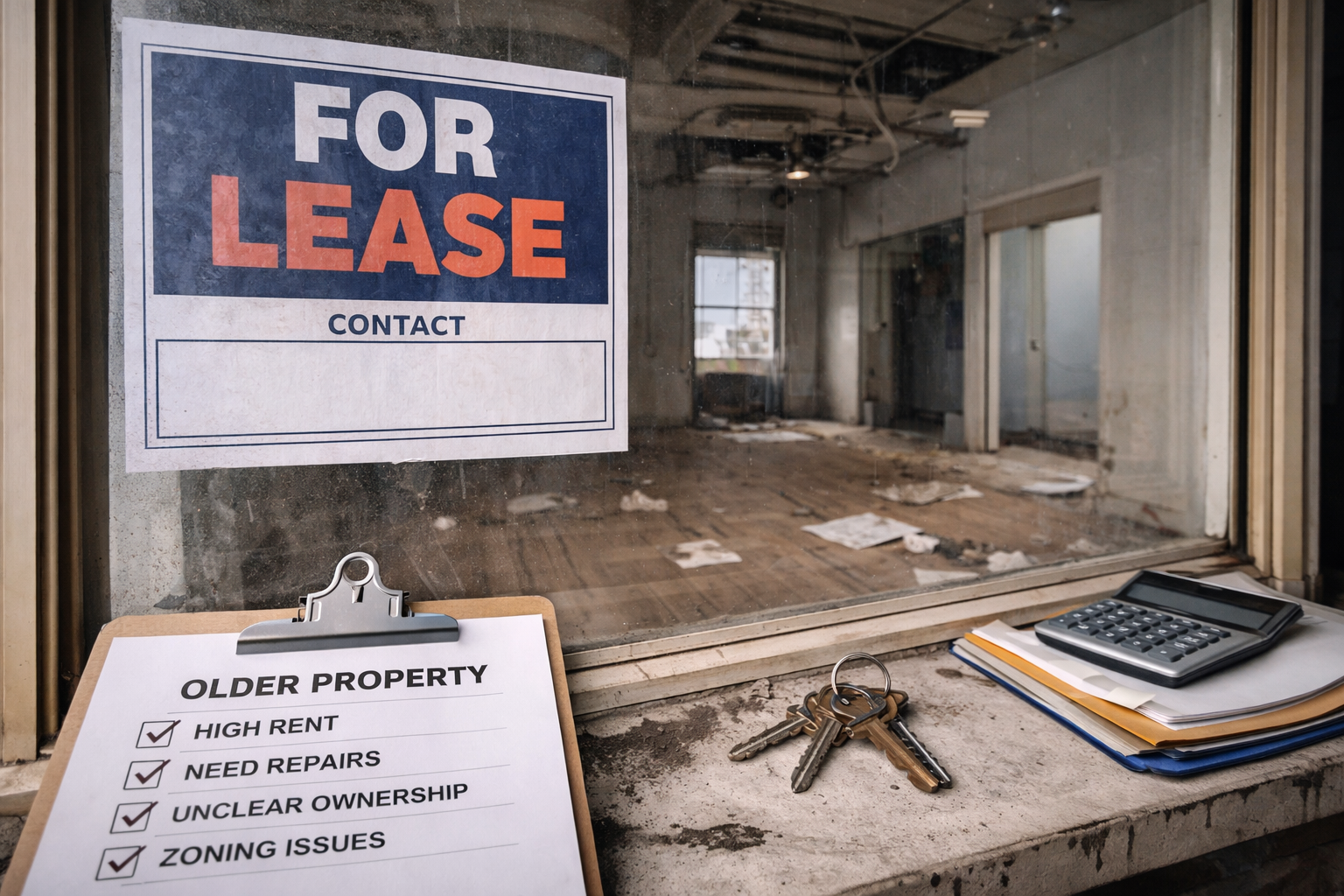
The building itself is the problem. Old buildings need expensive upgrades — plumbing, electrical, ADA ramps. A tenant might want the space, but when they see the renovation bill, they walk. You can't recruit your way past a broken building.
The rent is living in the past. Landlords set rents based on what they used to get — or what they need to cover their mortgage. Neither of those things cares about your current market. When rent and reality don't match, the space sits.
The space doesn't fit the business. A 6,000 sq ft floor plate with no windows doesn't work for a boutique. A basement with no signage doesn't work for a restaurant. Not every space is right for every use. That's okay — but you have to be honest about it.
There's no support system for new tenants. Even great businesses fail without help. If your downtown can't offer guidance, referrals, or resources after a tenant signs — you're setting them up to churn.
The "Just Fill It" Trap
When pressure builds, the instinct is to fill spaces fast. Pop-ups, incentives, ribbon cuttings. These aren't bad — but they're band-aids if the underlying issue isn't fixed.
Here's what happens when you rush it:
Tenant opens
Tenant struggles
Tenant closes
Repeat
Every cycle burns trust. With business owners. With your community. With yourself.
The goal isn't speed. The goal is stickiness.
What to Do Instead (Start Here)
Before you recruit a single business, answer these four questions honestly:
✅ Is this building actually ready? Not "could it be ready" — is it ready now?
✅ Is the rent realistic for what the market will bear?
✅ What kind of business could actually succeed in this specific space?
✅ Do we have the support systems to help a new tenant survive year one?
If you can't answer yes to all four, your job isn't recruitment. Your job is preparation.
Temporary Activation: A Tool, Not a Solution
Pop-ups and short-term tenants can work — but only if you're using them strategically.
Use them to:
Test what the market wants
Keep the block feeling alive while you fix bigger issues
Learn what works before committing to a long-term lease
Don't use them to avoid the harder conversation about why the space is really empty.
Temporary activation should buy you time to fix things — not distract everyone from the fact that you haven't.
The Shift That Changes Everything
Stop asking: "How do we fill this space?"
Start asking: "What would need to be true for this space to support a thriving business?"
That one question slows you down for about five minutes. And it speeds everything else up.
Downtowns that get this right don't have fewer empty storefronts because they tried harder. They have fewer because they stopped confusing activity with progress.
The Takeaway
An empty storefront is information. It's telling you something — about the building, the rent, the market, the support systems.
Listen to it before you try to fix it.
The communities that do? They stop chasing occupancy. They start building conditions where businesses actually want to stay.
That's the work. And it's worth doing right.
Want to keep going? Next up: The Tradeoff Every Downtown Has to Make (and Most Avoid)