Measuring Downtown Success Beyond Foot Traffic
If the Sidewalks Look Busy, Is That Actually Progress?
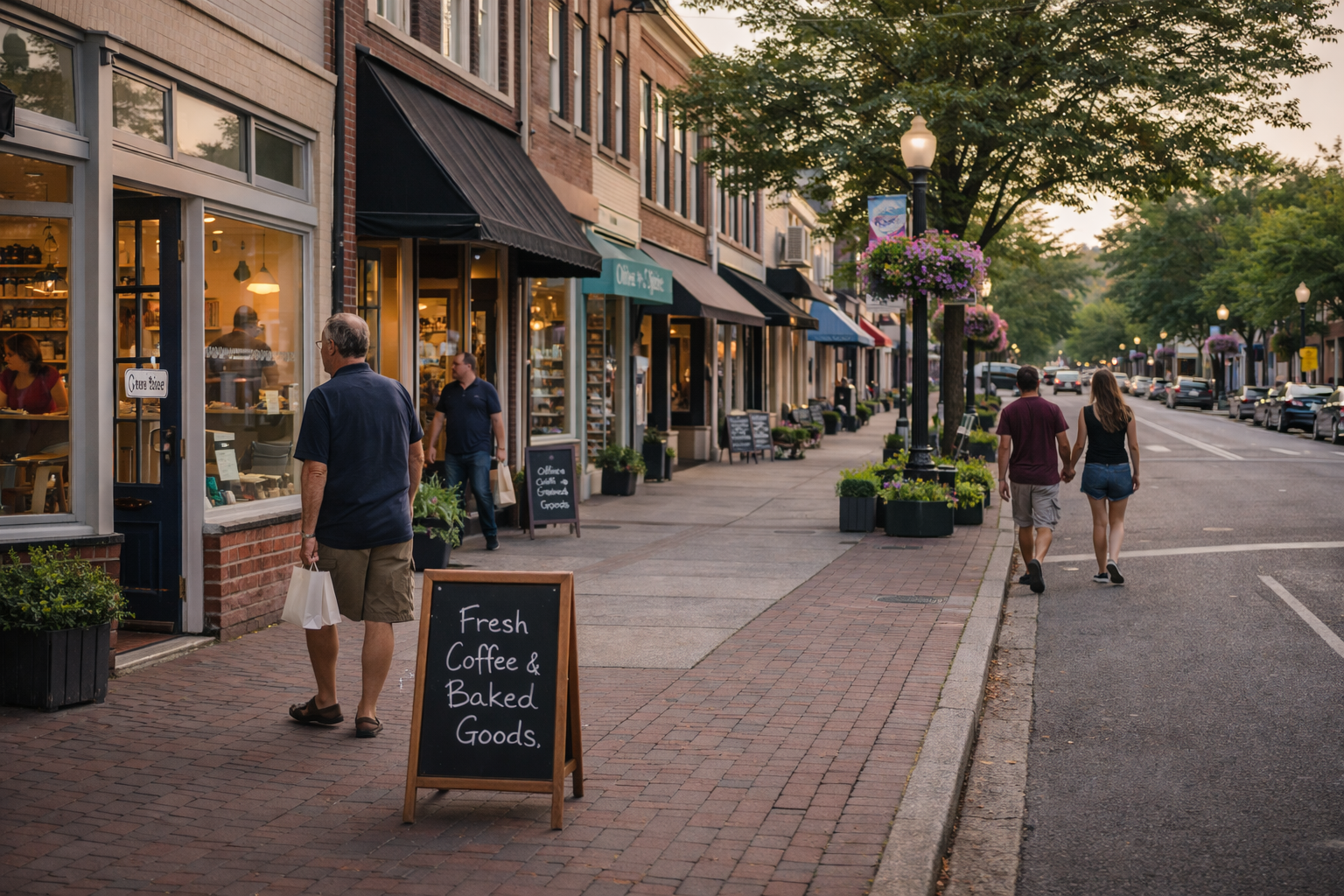
Foot traffic is almost always the first thing people point to when talking about how downtown is doing. And it makes sense. It's visible, it's intuitive, and it's easy to explain in a board meeting or to an elected official.
When sidewalks feel busy, it looks like progress. When they're quiet, concern follows fast.
The problem is that a lot of downtowns that feel busy are still struggling. And some that look underwhelming on a random Tuesday are quietly getting stronger year over year.
That gap between how downtown looks and how it's actually doing is usually the sign that something's off with how success is being measured.
Why Foot Traffic Became the Default
Foot traffic won out as the go-to metric for understandable reasons. It's easy to observe. It lines up well with events and promotions. In a lot of communities, it's one of the only data points available without specialized tools or expensive studies.
It also feels objective in a way that messier indicators don't. Counting people seems cleaner than trying to measure business health, organizational capacity, or market readiness.
None of that makes foot traffic wrong. It makes it incomplete.
What Foot Traffic Doesn't Tell You
Foot traffic tells you people are present. That's about it.
On its own, it doesn't tell you:
Whether the businesses those people visited are profitable
Whether leases are being renewed or quietly expiring
Whether the activity is repeatable or tied to a one-time event
Whether the organization running the district is sustainable or running on fumes
A festival can spike foot traffic for a weekend and drop straight back to baseline by Monday. A single strong anchor business can pull counts up while the rest of the block struggles. Foot traffic can even increase while vacancy and business churn stay exactly the same.
When foot traffic is the primary measure, the pressure it creates is to chase visibility instead of building function. That's a costly trade.
A Better Starting Question
Instead of asking "How many people were downtown this week?", try asking "Is downtown functioning better than it was a year ago?"
That shift changes what you're paying attention to.
Function shows up in durability, not just activity. In predictability, not just spikes. In fewer problems to manage, not just more people to count. When function improves, foot traffic tends to follow naturally. When foot traffic gets forced without function underneath it, the results rarely last.
Four Indicators That Tell You More
These don't replace foot traffic. They give it context. Together, they paint a much more honest picture of where a downtown actually stands.
1. Business Stability
This is one of the strongest signals of real progress, and it's one of the least talked about.
Business stability shows up as fewer closures, lease renewals happening without drama, businesses expanding their hours or offerings, and owners putting money back into their spaces. None of that is flashy. Most of it happens without a press release.
But a downtown where businesses are staying and reinvesting is doing something right. A downtown that's constantly replacing the same spots with new tenants is working much harder for the same results.
2. Organizational Capacity
A district can only improve as fast as the organization running it can sustain the work.
Signs that capacity is genuinely improving: priorities are clearer than they were before, projects are actually reaching completion, there are fewer last-minute pivots, and the leadership team is making decisions instead of revisiting them. When capacity improves, a downtown often feels calmer before it feels busier. That calm isn't stagnation. It's alignment.
3. Property Momentum
Real estate moves slowly. That's exactly why it's worth watching.
Property momentum shows up in incremental building improvements, upper floors moving from "we've been talking about that" to actual plans, owners making longer-term commitments, and vacancy that becomes more predictable even if it's not fully resolved.
These shifts are subtle. They're also hard to fake. When property owners start acting with more confidence, it usually reflects a real belief that the district is stabilizing.
4. Consistency Over Time
Sustainable downtowns are consistent. Predictable business hours. Repeat customer behavior. Less need to reset the work plan every January. Fewer one-off experiments that don't connect to anything.
Consistency gets mistaken for lack of creativity. It's actually a sign that the basics are working well enough to build on.
As one practitioner put it: success feels boring before it feels exciting.
How to Use Foot Traffic Without Letting It Drive Everything
Foot traffic still has real value when it's used correctly.
It works best when it's compared over time rather than evaluated in isolation, paired with data on sales activity, lease status, or business retention, and used to test specific interventions rather than declare blanket victory.
The most useful foot traffic question isn't "Was it up this month?" It's "It was up. What else changed, and what didn't?" That kind of follow-up keeps decision-making honest.
Measure What Matches the Phase You're In
Not every downtown should be measuring the same things at the same time. A district in early stabilization will look very different from one that's ready to grow, and expecting growth-phase results during stabilization is one of the fastest ways to create unnecessary pressure and bad decisions.
Broadly, most downtowns move through recognizable phases:
Stabilizing basic function
Strengthening systems and relationships
Expanding activity and attracting new investment
Measuring phase three metrics during phase one doesn't make the work go faster. It makes the organization feel like it's failing when it isn't.
Getting honest about what phase a downtown is actually in, and measuring accordingly, is where a lot of organizations get real clarity for the first time. It's also one of the first things RAD works through with communities, because the right metrics at the right time change what decisions get made and how the board interprets progress.
When the Metrics Are Wrong, the Decisions Follow
Misaligned metrics don't just create confusion. They drive real consequences.
When success is defined too narrowly, organizations start chasing visibility over stability, stacking initiatives instead of sequencing them, and burning out the people doing the work. Over time, effort stops translating into durable improvement, and trust erodes, not because people stopped caring, but because the scoreboard was wrong.
Better metrics protect progress. They keep the organization pointed at the right problems.
The Takeaway
Measuring downtown success isn't about collecting more data. It's about asking better questions.
Progress often shows up in places that don't photograph well. Businesses quietly renewing leases. A property owner finally making the call to fix the façade. A board meeting that ends with clear decisions instead of lingering debate.
If the only thing being measured is how busy downtown looks on a given day, it's easy to miss how well it's actually working.
Continue the series: Next: Placemaking vs. Economic Development
RAD helps downtown organizations and EDOs build measurement frameworks that match where they actually are, not where they hope to be. Explore our services here.