
Placemaking vs Economic Development
They're Related. They're Not the Same Thing.
Placemaking and economic development get talked about as if they're interchangeable. They share language, share imagery, and share a lot of the same tools. So when one gets mentioned, the other usually isn't far behind.
But they're not the same thing. And more importantly, they don't belong in the same spot in the sequence.
Getting that order wrong is one of the most common and costly mistakes in downtown work.
Why They Keep Getting Confused
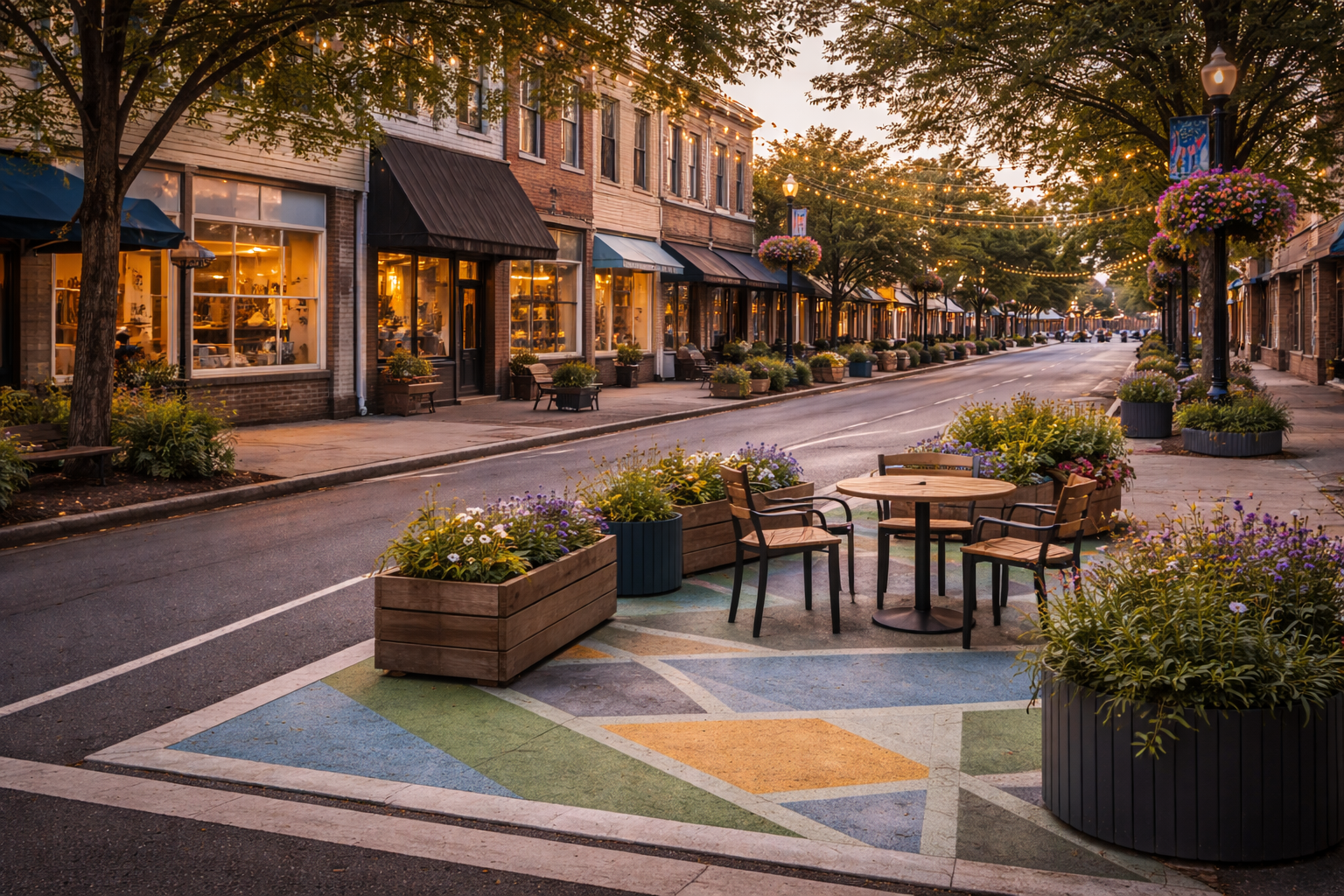
Placemaking is outwardly visible. Painted crosswalks, pop-up seating, pocket parks, murals, temporary installations, events that transform a block for a weekend. You can photograph it. You can post it. You can show it in a board presentation and watch people nod.
Economic development is mostly invisible. Leases renewing. Businesses stabilizing. Property owners finally deciding to invest in a building they've been sitting on. Systems becoming less fragile over time. None of it photographs particularly well.
When a downtown feels stuck and pressure is building, visible activity feels like progress. That pull is real and understandable. But visibility and economic function aren't the same thing, and treating them as if they are is where things go sideways.
What Placemaking Actually Does Well
Placemaking has genuine value. It's not the problem. The problem is what it gets asked to do.
Used intentionally, placemaking can shift perception in places that feel overlooked, lower the barrier for people to re-engage with downtown, signal that someone cares and is paying attention, and test ideas quickly before committing to permanent changes.
The Project for Public Spaces, which essentially built the modern vocabulary of placemaking, has always framed it as a way to help communities reimagine what's possible. That's a real and useful function. Especially early in a revitalization process, when the goal is to crack open a stuck conversation or give people a reason to show up differently.
But shifting perception is not the same as fixing the conditions underneath the perception.
What Placemaking Can't Do
Placemaking can't lower operating costs for a business owner who's struggling to make rent. It can't resolve a building code issue that's been holding up a renovation for two years. It can't create consistent daily demand where the market doesn't support it. It can't stabilize a staffing situation or correct a lease structure that doesn't work.
When placemaking gets asked to do that work, the pattern is predictable. Each new installation or event has to be bigger or more novel to maintain the same level of attention. The effort keeps climbing. The return keeps shrinking. That's not a failure of placemaking. It's a mismatch of expectations.
What Economic Development Actually Requires
Economic development is about creating conditions where businesses and property owners can make long-term decisions with some confidence.
That work includes things like:
Business retention and direct support for existing operators
Realistic recruitment based on what the market can actually hold
Predictable operating environments where businesses know what to expect
Coordinated systems that reduce daily friction
Patient, consistent follow-through over time
Most of this is invisible to the public. When it's working, it often looks like nothing dramatic happened. But something did. Risk became more manageable. The environment got easier to operate in. A business owner who was thinking about leaving decided to stay. A property owner who'd been on the fence finally made the call to invest.
Those are the signals that a downtown is actually getting better.
The Real Tradeoff: Activity vs. Function
The tension between placemaking and economic development comes down to a tradeoff that shows up in almost every downtown organization at some point.
Activity reassures people now. Function sustains progress later.
Downtowns that prioritize activity before function tend to feel busy without becoming durable. Things look good from the outside. The Instagram feed is full. But underneath, the same problems that were there before are still there, just harder to see through all the programming.
Downtowns that invest in function without any visible signal of progress can struggle with a different problem: nobody believes anything's happening. Community trust erodes. Funders get nervous. Boards start pushing for something they can show people.
The challenge isn't choosing one over the other. It's sequencing them correctly and being honest with stakeholders about what each one does.
When Placemaking Supports Economic Development
The two work well together when placemaking is tied to a specific goal, tests something that could become permanent, aligns with what existing businesses actually need, and is framed honestly as experimental rather than a solution.
Brookings research on downtown public space investments has documented exactly this pattern. In cities like Buffalo and Albuquerque, targeted placemaking investments that were connected to clear economic goals helped catalyze private investment in adjacent blocks. One didn't happen without the other, and importantly, the economic groundwork came first.
In that context, placemaking acts as a bridge. It connects short-term visibility to long-term intention. It gives the community something to see while the slower, less photogenic work continues underneath.
When Placemaking Gets in the Way
Placemaking becomes a problem when it substitutes for difficult conversations that need to happen, absorbs staff and volunteer capacity that's needed for retention and stabilization work, creates pressure to maintain constant novelty to keep stakeholders engaged, or becomes the primary strategy instead of a supporting one.
At that point it can mask underlying issues instead of helping resolve them. And masking problems is worse than having them, because masked problems don't get solved.
A good diagnostic question: if you stopped the programming tomorrow, would the district hold? If the answer is no, that's worth sitting with.
Holding Both Without Burning Out
Downtowns that manage this well share a few habits. They limit how much placemaking is running at once. They connect activity explicitly to economic goals so that the relationship is clear internally and externally. They protect staff and volunteer capacity from being consumed by event cycles. And they regularly ask whether what they're doing is still serving the function it was supposed to serve.
That discipline isn't a lack of ambition. It's how you stay in the work long enough for it to compound.
RAD works with communities on exactly this kind of sequencing, helping organizations get clear on what phase they're in, what role placemaking should play at that phase, and how to build economic function without abandoning the visibility that keeps community trust intact. If your organization is wrestling with this balance, that's a conversation worth having with us.
The Takeaway
Placemaking and economic development are partners. Neither one replaces the other.
When activity supports function, downtowns build momentum that lasts. When activity replaces function, progress becomes harder and harder to sustain.
The most successful downtowns don't choose between them. They choose the right order.
Continue the series:Next: How to Support Microbusinesses and First-Time Entrepreneurs
RAD helps downtown organizations sequence placemaking and economic development work so that both deliver what they're actually capable of. Explore our services here