
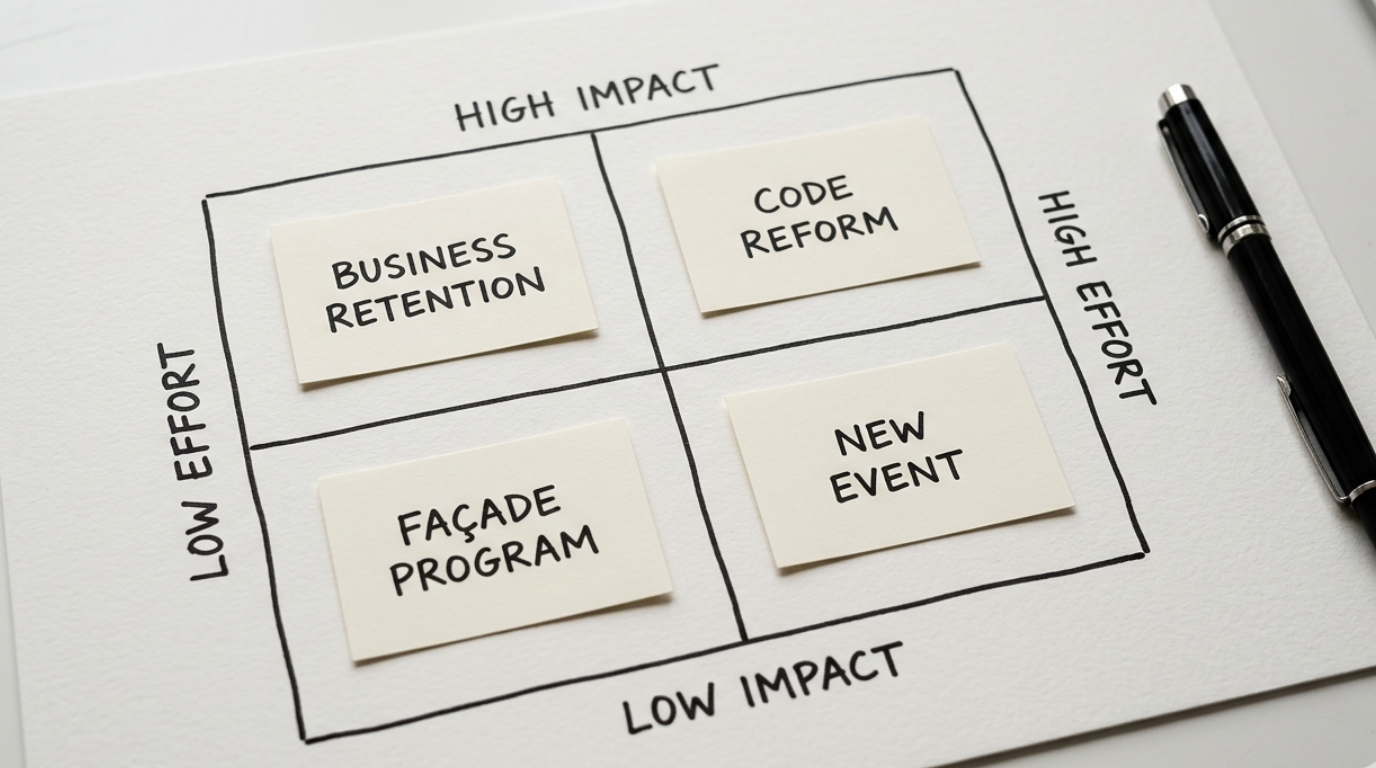
The Tradeoff Every Downtown Must Choose
Every Downtown Faces a Choice, Whether It Names It or Not
Most downtown leaders think progress is an effort problem. Get more people involved. Generate more ideas. Add more activity. But that's not usually what's in the way.
Progress stalls because of tradeoffs, and most downtowns never name them.
Every Downtown Has Limits. That's Not the Problem.
You have a fixed amount of time, staff, money, and attention. That's not a failure. That's just reality. The question isn't whether limits exist. It's whether you're managing them on purpose, or reacting when things break down.
When tradeoffs go unnamed, the cost shows up anyway. Burnout. Stalled projects. Staff frustration. Lost credibility. You didn't avoid the tradeoff. You just paid for it later.
The 4 Tradeoffs That Show Up in Almost Every Downtown
Visibility vs. Stability. Visible work feels productive. Events, announcements, new initiatives. People notice that stuff fast. Stabilizing work is quieter: business support, internal systems, maintenance, alignment. Nobody posts about it. But downtowns that always choose visibility over stability look busy while falling apart underneath. The ones that protect stability first sustain momentum longer and burn out less. The real question is whether you're doing visible work because it's needed, or because it's easier to defend.
Speed vs. Readiness. There's always pressure to move fast. Calendars fill up, people expect results, and momentum feels fragile. Moving fast creates energy, but moving fast before you're ready creates rework, stalled projects, and partners who stop trusting you. Speed isn't the enemy. Speed without preparation is. Readiness work feels slow because it's quiet, but it's what keeps momentum from dying the first time something goes sideways.
Breadth vs. Depth. A little of everything is tempting. A few events, some marketing, a bit of business support, a planning effort. That approach spreads effort so thin it barely leaves a mark. Depth means fewer priorities held longer, resisting the pull of the next new thing long enough to actually finish something. Breadth feels inclusive. Depth gets results.
Short-Term Wins vs. Long-Term Capacity. Quick wins matter. They build trust and confidence, especially early. But when wins become the goal instead of a byproduct, something breaks. You end up repeating the same work every year with less energy to show for it. Investing in capacity doesn't photograph well and rarely makes the newsletter, but it's what reduces friction over time and makes the work feel lighter instead of heavier.
Why Nobody Talks About This
Tradeoffs feel political. They force leaders to say not yet or not this year in public-facing work where that can look like weakness. So they go unnamed, and when they do, staff feel the overload, volunteers feel the strain, and businesses feel the inconsistency. Naming tradeoffs doesn't create conflict. Leaving them unnamed does.
How to Talk About Tradeoffs Without Blowing Things Up
Tradeoffs aren't permanent no's. They're sequencing. Instead of saying "We're not doing that," the conversation becomes "Not yet. Here's what needs to happen first." That framing preserves relationships, keeps focus, and builds trust over time. People handle limits far better when they understand the order.
The Takeaway
Downtown revitalization doesn't fail because communities don't care. It stalls because leaders try to avoid choosing. Tradeoffs are not a sign of weakness. They're a sign of leadership. The healthiest downtowns aren't doing the most. They're doing what fits, in the right order, at the right time.
Next up: Business Retention Is the Most Underrated Downtown Strategy
Want to see how RAD helps communities work through these decisions in real situations? Explore how we work and our services here.