The Downtown Assessment Checklist
Before Another Plan, You Need a Clear Picture
Most downtowns don't need another idea. They need clarity about what's actually going on right now.
Decisions made without a clear read on current conditions tend to land poorly, even when the idea behind them is solid. A good initiative in the wrong environment, at the wrong time, produces frustration instead of progress. The assessment is how you avoid that.
This isn't about grading performance or building a case against anyone. It's about seeing what's actually there before deciding what to do next.
What a Downtown Assessment Is and Isn't
A downtown assessment is a snapshot, not a verdict.
It's not a comprehensive market study, a planning document, or a list of projects to launch. It's a structured way to notice patterns, a reality check on readiness, and a tool for sequencing what comes next.
Assessment creates alignment. Action comes after.
The most important thing to remember when working through this: you're looking for signals, not perfection. Patterns matter more than individual examples. And the observations are most useful when they're shared honestly, without pressure to immediately solve what you're seeing.
The Checklist
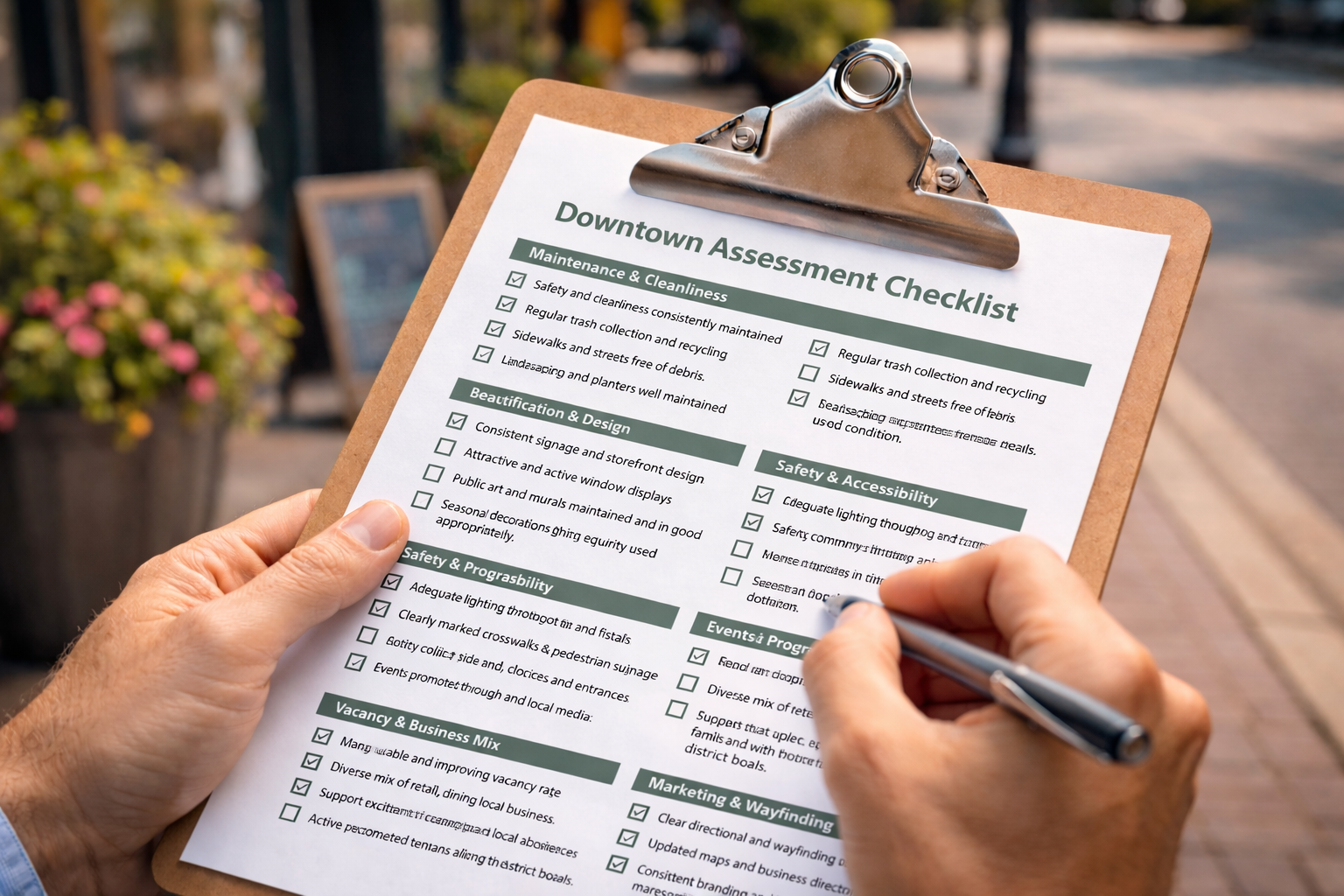
Work through each section as an observer, not a fixer. Take notes. Look for patterns across sections. The picture that emerges is more valuable than any single answer.
1. Business Environment
Start with the businesses already operating. They're your best source of real information about how the district is functioning.
☐ Businesses are open consistently and hours are predictable
☐ Turnover is stable or improving, not accelerating
☐ Owners are reinvesting, even in small ways
☐ Businesses know what support is available to them
☐ You have a clear sense of what it would take for them to perform at a higher level
A downtown with fewer businesses that operate reliably is often in better shape than one with constant churn and a lot of new faces that don't last.
2. Vacancy and Space Readiness
Vacancy tells a story, but only if you read it carefully. Not all vacancy is the same.
☐ You know how long each vacant space has been empty
☐ Buildings are functional, without conditions that make them difficult to lease
☐ Turnover is not concentrated on the same blocks repeatedly
☐ Any temporary uses are serving a purpose, not just covering over a longer-term issue
Vacancy is information. Treat it that way, not as a failure that needs to be hidden or rushed past.
3. Property Ownership and Investment Signals
Property owners shape a downtown more quietly than any single program does. Pay attention to what they're doing and not doing.
☐ Properties are being maintained at a basic level
☐ Small but consistent improvements are happening somewhere in the district
☐ Owners are willing to have real conversations about their properties
☐ Expectations about rent, timing, and investment are grounded in reality
Even modest investment signals confidence. Complete inactivity usually signals uncertainty about the district's direction.
4. Organizational Capacity
The downtown can only improve as fast as the organization running it can sustain the work. This section is worth spending real time on.
☐ Staff workload is manageable, not running at a constant deficit
☐ Volunteers have clear roles and follow through on them
☐ Projects are reaching completion, not lingering without resolution
☐ Decisions are made clearly and not revisited repeatedly
Capacity isn't just about headcount. It's about focus, structure, and whether the people doing the work feel like they're getting somewhere.
5. Governance and Role Clarity
Unclear roles create friction that nobody can quite name but everyone feels.
☐ Board members understand the difference between governance and operations
☐ Staff are empowered to make execution-level decisions without going back to the board
☐ Responsibility is clearly assigned, not passed around
☐ The same decisions are not getting relitigated meeting after meeting
Role confusion is one of the quietest and most persistent sources of burnout in downtown organizations. This section often reveals more than people expect.
6. Programming and Activity Patterns
Activity can support the district or distract from it. The difference is worth looking at honestly.
☐ Events are connected to existing businesses, not just running alongside them
☐ Programming isn't consuming more capacity than it produces in value
☐ Events are repeated because they're working, not just because they're familiar
☐ Activity is building toward something, not just filling the calendar
Activity should reinforce function. When it's substituting for function, that's worth naming.
7. Physical Environment and Experience
Walk downtown as if you've never been there before. Try to see it fresh.
☐ Sidewalks, crossings, and lighting are in decent shape
☐ It's reasonably clear where to go and what's available
☐ Maintenance is consistent across blocks, not spotty
☐ The overall experience feels welcoming rather than confusing or neglected
Small physical barriers often create larger friction than they should. This section doesn't require a design expert. It requires honest eyes.
8. Partnerships and Alignment
Downtown doesn't operate in isolation. Neither should the organization running it.
☐ Key partners are coordinating, not just working in parallel
☐ Goals are shared and pointed in the same direction
☐ Communication is consistent, not only happening when there's a problem
☐ You can identify where gaps exist and where work is being duplicated
Misalignment adds workload without adding impact. It's worth finding where it's happening before it compounds.
9. Momentum and Carry-Forward
Before looking forward, look back.
☐ You know what was started last year and what actually finished
☐ Projects that stalled have been formally acknowledged, not just quietly abandoned
☐ Lessons from last year are being carried into this year's decisions
☐ The work plan reflects what's actually in motion, not just what's planned
Progress compounds when learning does. Organizations that assess carry-forward honestly tend to make better decisions about what to take on next.
10. Community Expectations
Finally, pay attention to what people expect, not just what they're saying out loud.
☐ There's a shared, realistic picture of what downtown can become and when
☐ Timelines people expect align with current organizational capacity
☐ The pressure to move fast is coming from real readiness, not anxiety
☐ Expectation gaps have been named and addressed, not left to grow
Expectation gaps are often where frustration starts. Getting honest about them early saves a lot of trouble later.
What This Checklist Tells You
Taken together, these ten sections help answer three questions that should drive every sequencing decision:
What's working well enough to build on?
What's fragile and needs stabilization before anything else?
What isn't ready yet, even if it sounds exciting?
That clarity is what protects both momentum and morale. It keeps organizations from launching things the district can't yet hold.
What Comes After the Assessment
Assessment doesn't produce a project list. It produces a sequence.
Once conditions are clear, it becomes easier to decide what comes first, what should wait, what needs preparation before it's ready to move, and what should stop entirely. Good assessment slows the beginning so progress can speed up later.
It's also hard to see your own patterns clearly when you're inside them every day. RAD conducts downtown assessments with communities that want an honest outside read before making their next round of decisions. If that's something your organization needs, let’s explore what that work looks like together.
The Takeaway
Downtown revitalization doesn't start with action. It starts with understanding.
A clear assessment replaces urgency with intention. Before asking what to do next, make sure you actually understand what's already happening.
Continue the series: Next: How to Fund a Downtown Organization Without Living Grant to Grant
RAD works with municipalities, Main Street programs, and organizations working to improve their downtowns. Explore our services and see how we help here.